
The Thirst Trap: Why Hotels and Beverage Brands Are Drowning in a Sea of Sameness (And How to Break Free)
You scroll.
You stop.
You scroll again. What did you just see?
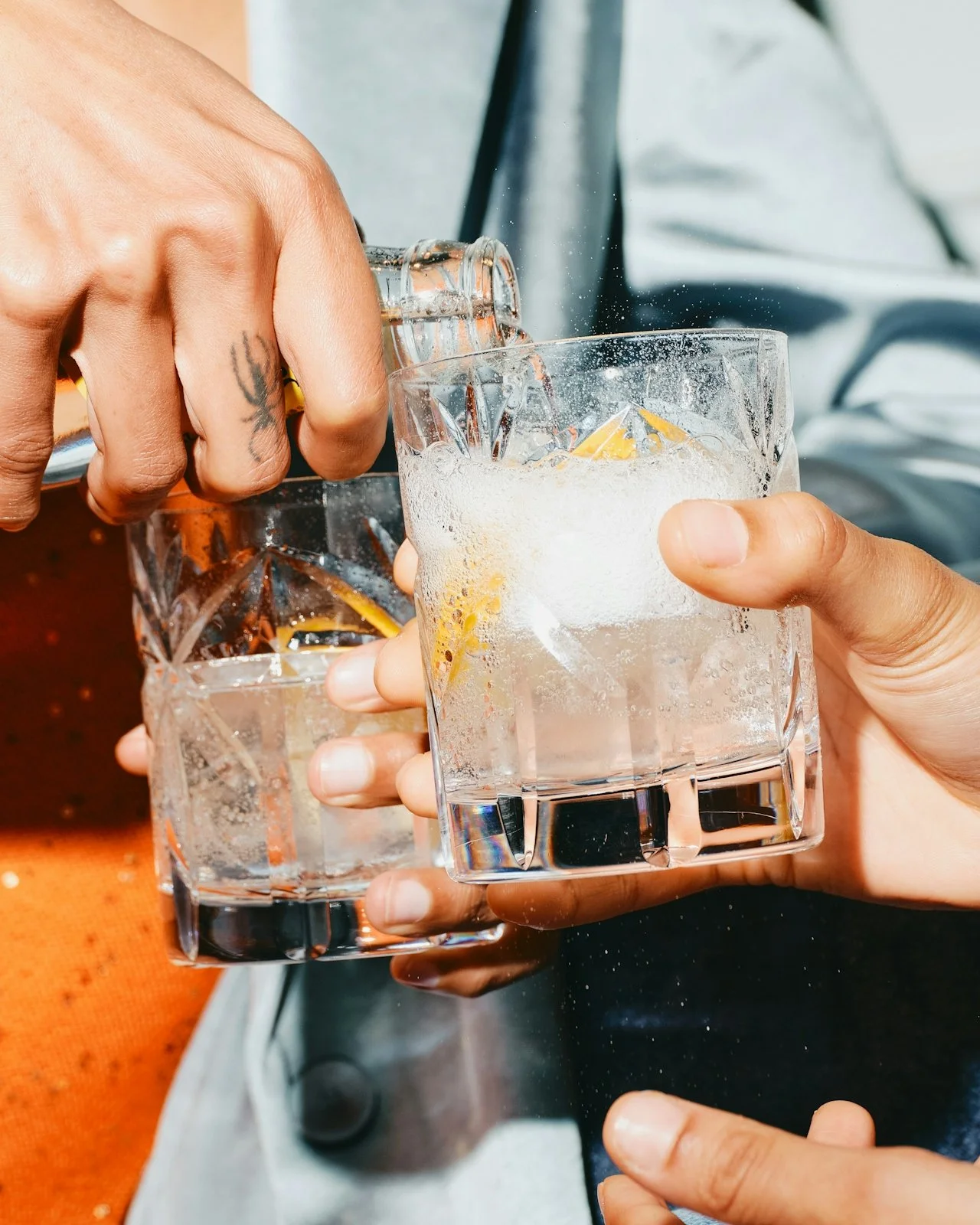
If you’re tracking the hotel and beverage space, you saw an overhead shot of a brunch table. You saw a minimalist can glistening with condensation. You saw an infinity pool, a perfectly-made bed in a room with a neutral color palette, and a hand holding a craft cocktail against a tastefully blurred background.
You saw the same thing. Over and over.
We call this "The Sea of Sameness." It’s a comfortable, aesthetically-pleasing, beige-colored ocean where brands go to die.
For hotel and beverage companies, this is a crisis. Why? Because you aren’t just selling a product; you’re selling an experience. You’re selling a feeling, an escape, an identity. And right now, most of you are telling the exact same story.
When every "boutique" hotel has the same Edison bulbs and exposed brick, "boutique" just means "trendy." When every "craft" seltzer uses the same thin font and pastel colors, "craft" just means "not White Claw."
Your aesthetic has replaced your identity. And in a market this crowded, interchangeable is invisible.
Being "good" isn't good enough. You have to be distinct. You have to be memorable. You have to be the one thing they can't get anywhere else.
The Shared Problem: Selling the Intangible
Hotels and beverages share a unique challenge. Nobody needs a $22 craft cocktail. Nobody needs a $500-a-night room with a curated minibar.
They want it.
They want the feeling it gives them. The status it confers. The story they can tell about it. They are buying a small piece of an identity.
The fatal mistake is believing you're selling the features.
Hotels: You're not selling thread count and a rain shower. You're selling "a refuge for the city's creatives" or "an irreverent party hub" or "undisturbed, analog solitude."
Beverages: You're not selling "100 calories and natural flavors." You're selling "the perfect reward after a brutal hike" or "the sophisticated non-alcoholic choice for adults" or "a rowdy weekend in a can."
If you can't articulate that core feeling in a single sentence, you're just selling liquid or a bed. And in that case, you'd better be the cheapest.
How to Break Free: A Brand That Bites Back
Blending in is a survival tactic for prey. Predators stand out. A coyote doesn't try to look like a rabbit. It looks, sounds, and acts like a coyote.
Your brand needs to do the same. It’s time to stop blending in and start hunting.
Here’s how.
1. Excavate Your "Untamable" Truth
Most brands build their identity on a foundation of trends. This is a house of cards. You must build on your unshakeable truth. What is the one thing about you that is non-negotiable?
Is it your obsessive, scientific pursuit of the perfect roast?
Is it your building's scandalous history as a 1920s speakeasy?
Is it your founder's belief that non-alcoholic beer should still feel like beer?
Case in Point: Look at Liquid Death. It’s water. In a tallboy can. With a heavy metal aesthetic. They found a truth: "Corporate" water branding is boring, and single-use plastic is weak. Their brand truth is "death to plastic" and "murder your thirst." It’s absurd, it’s aggressive, and it’s impossible to mistake for a bottle of Fiji.
How we find it: We act as brand archaeologists. We dig past the buzzwords ("artisanal," "curated," "luxury") to find the bones of your story. The part that's so true, it almost feels dangerous to say out loud.
2. Create a "Howl," Not Just a Logo
Your visual identity is your calling card. It’s the scent you leave on the trail. It needs to do more than look pretty; it needs to communicate your entire story in a microsecond.
For Hotels: Does your lobby feel like your Instagram? Does your key card, your menu font, and your bathrobe all tell the same story? The Standard hotels are brilliant at this. Their playful, slightly retro, culture-first brand is everywhere—from their bold red logo to their famously cheeky "Not-Standard" amenities. You know when you're in one.
For Beverages: Your package is your single most important salesperson. On a crowded shelf, a customer gives you two seconds. Your can or bottle has to grab them by the throat. It must feel like a choice, not just an option.
How we do it: We don't just design a logo. We build an entire visual world. A world that’s so cohesive, it’s recognizable even without the logo. It’s about creating a "howl" so distinct, your pack can find you in the dark.
3. Speak the Local Language (Your Customer's)
Stop talking like a corporation trying to sound cool. "Elevate your evening." "Discover our curated spaces." "A premium experience." This is verbal sameness. It's static.
Your brand voice should be a weapon. It should filter out the people who "don't get it" and create a fanatical bond with the ones who do.
Are you witty and irreverent?
Are you serene and poetic?
Are you a knowledgeable, no-B.S. guide?
Are you a rebellious, loud-mouthed friend?
Case in Point: The gin brand Aviation, even before Ryan Reynolds, had a voice. It was "pre-prohibition," "new western," and felt steeped in American history. It told a story. When Reynolds joined, he just cranked the volume on that irreverent, American voice. It fit.
How we find it: We listen. We figure out who your truest customer is, and we build a language that speaks directly to them—not to everyone. A strong voice attracts your tribe.
Stop Blending In. Start Biting.
The "Sea of Sameness" is comfortable. It's safe. It's also where you become a commodity, forced to compete on price and convenience alone.
True brand-building is an act of courage. It’s the willingness to be different, to be opinionated, and to stand for something.
Your hotel isn't for everyone. Your drink isn't for everyone. That’s the entire point.
You're a coyote, not a sheep. It's time to act like it.
Tired of blending in? The hunt for a real brand starts here. Let's Talk.